Résumé Guide for the AI Era: 5 Research-Backed Rules
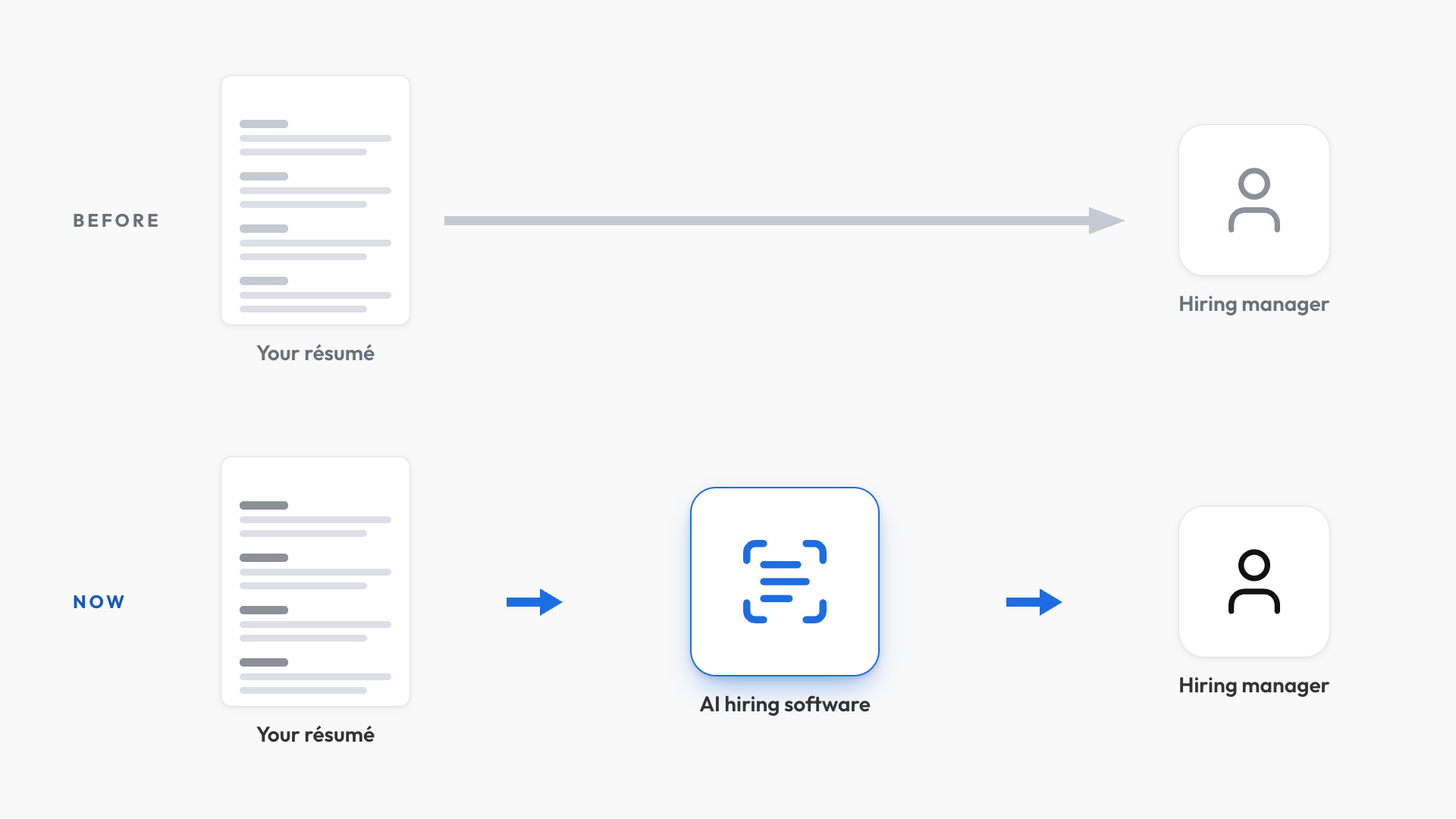
Hey friends - finding reliable résumé advice was already hard enough, and now employers are using AI to screen applications, so it's fair to ask whether résumés even matter anymore.
After weeks analyzing hiring reports and academic studies covering more than 4,000 hiring managers and nearly 2 million applications, I found that résumés still matter, but the rules have changed.
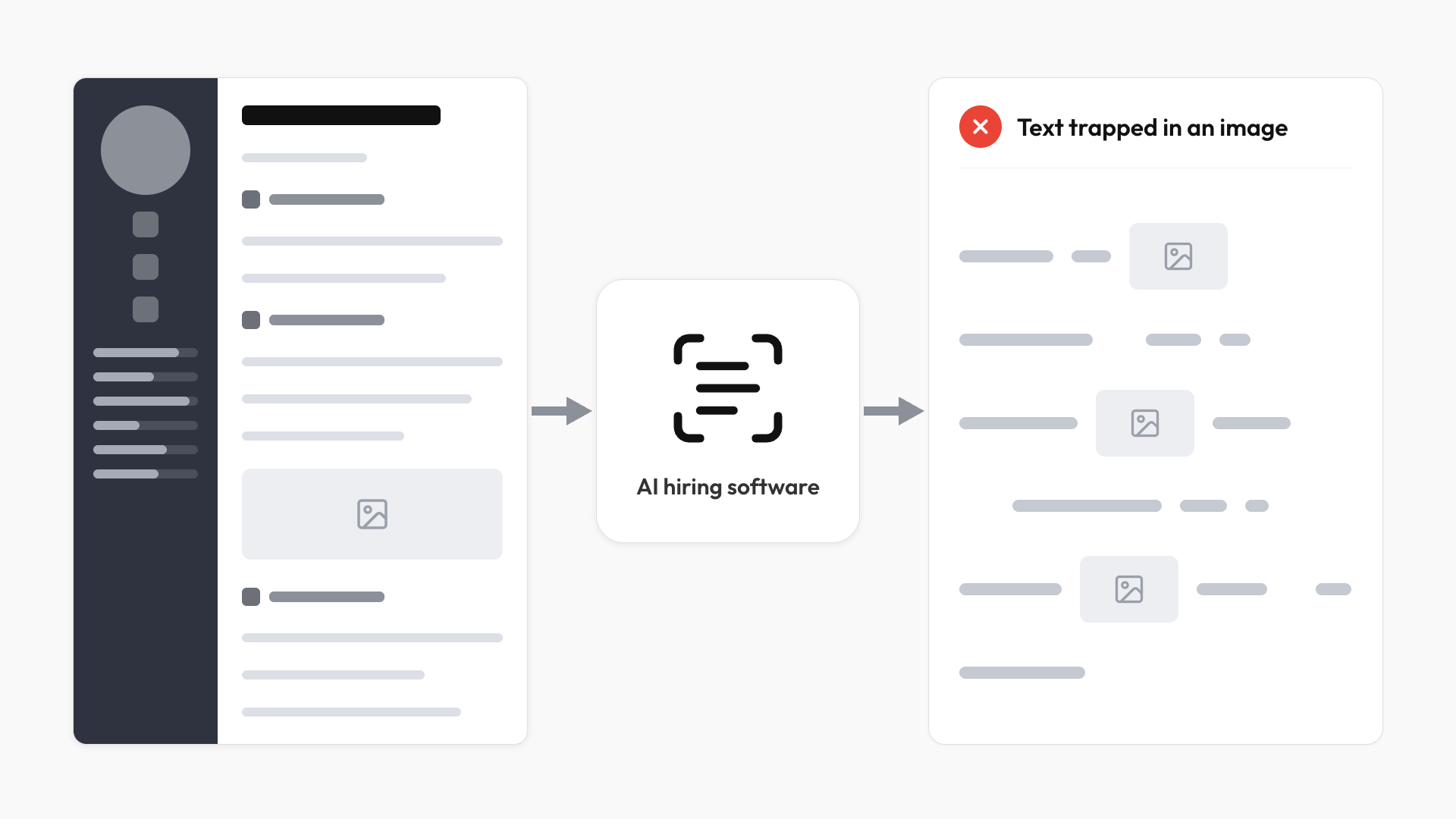
87% of hiring managers say their AI hiring software reads simple, text-based résumés more accurately than fancy visual ones.
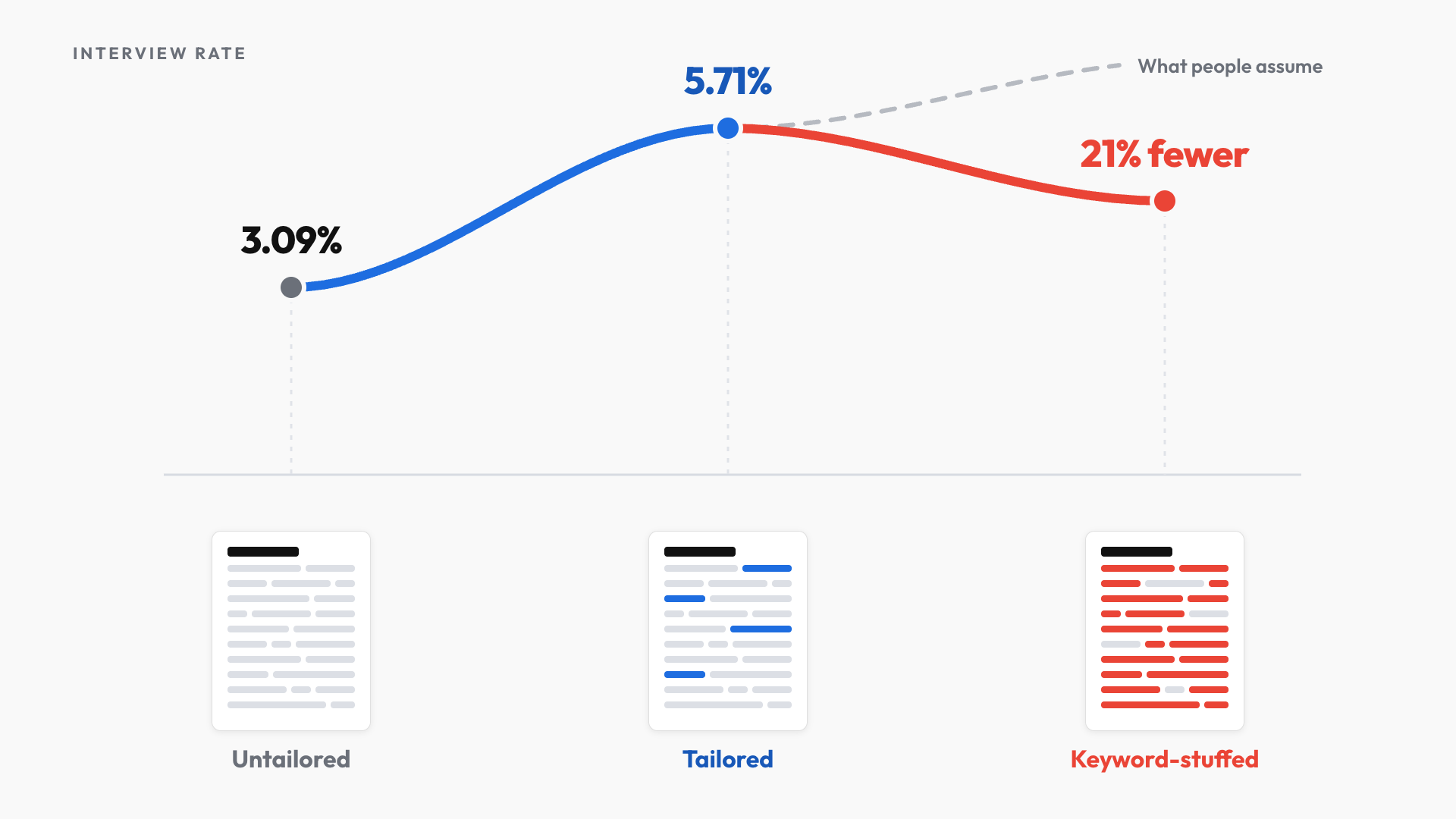
Tailored résumés saw 84% higher interview rates, but résumés with the most keywords performed worse.
59% see candidates using AI as a good sign, but 28% reject AI-heavy résumés that show little to no effort.
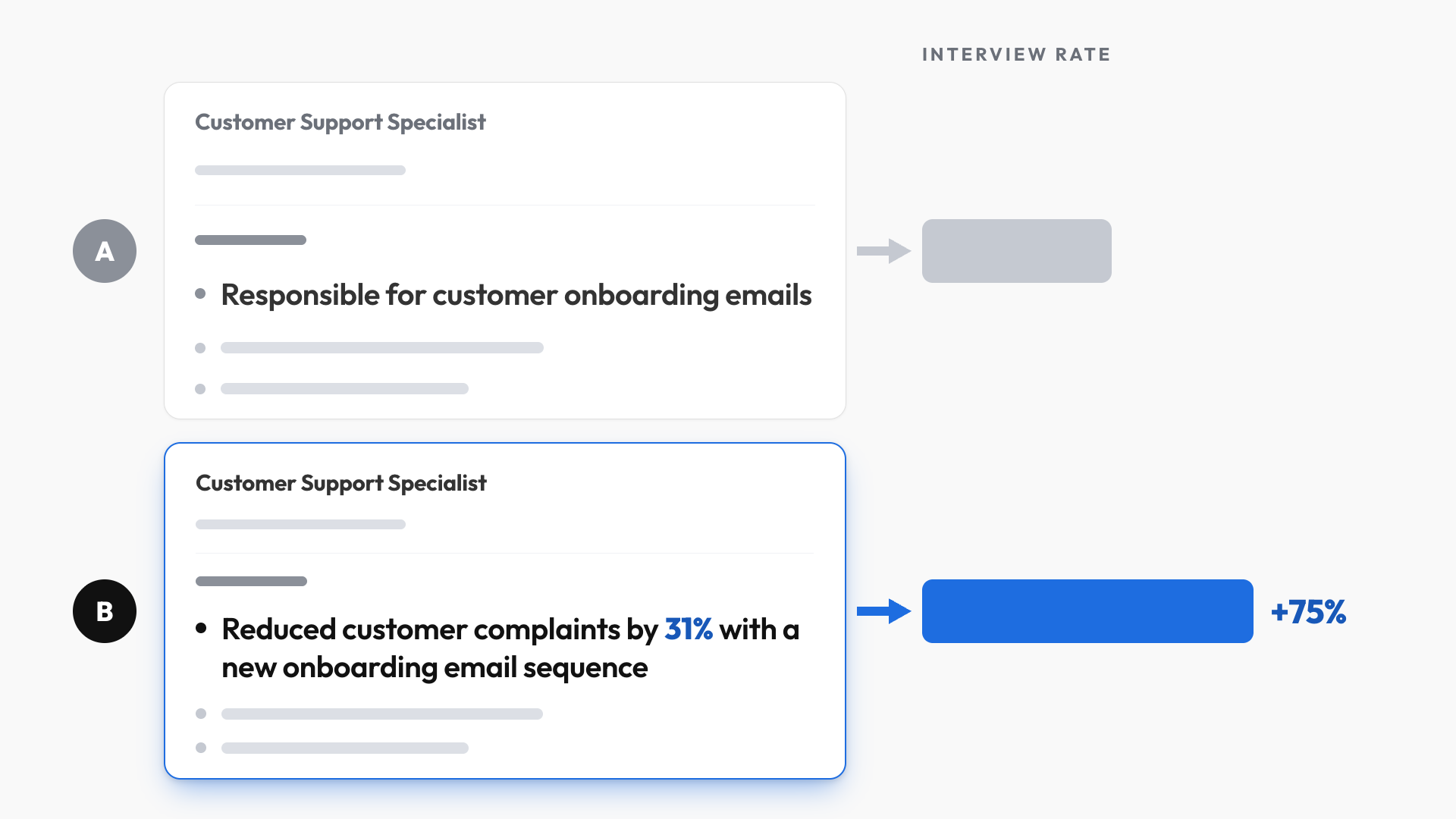
Résumés that quantified impact saw 75% higher interview rates than those that only described responsibilities.
60% want candidates to prove their AI skills, not just list them.
Rule 1: Make Sure AI Can Read Your Résumé
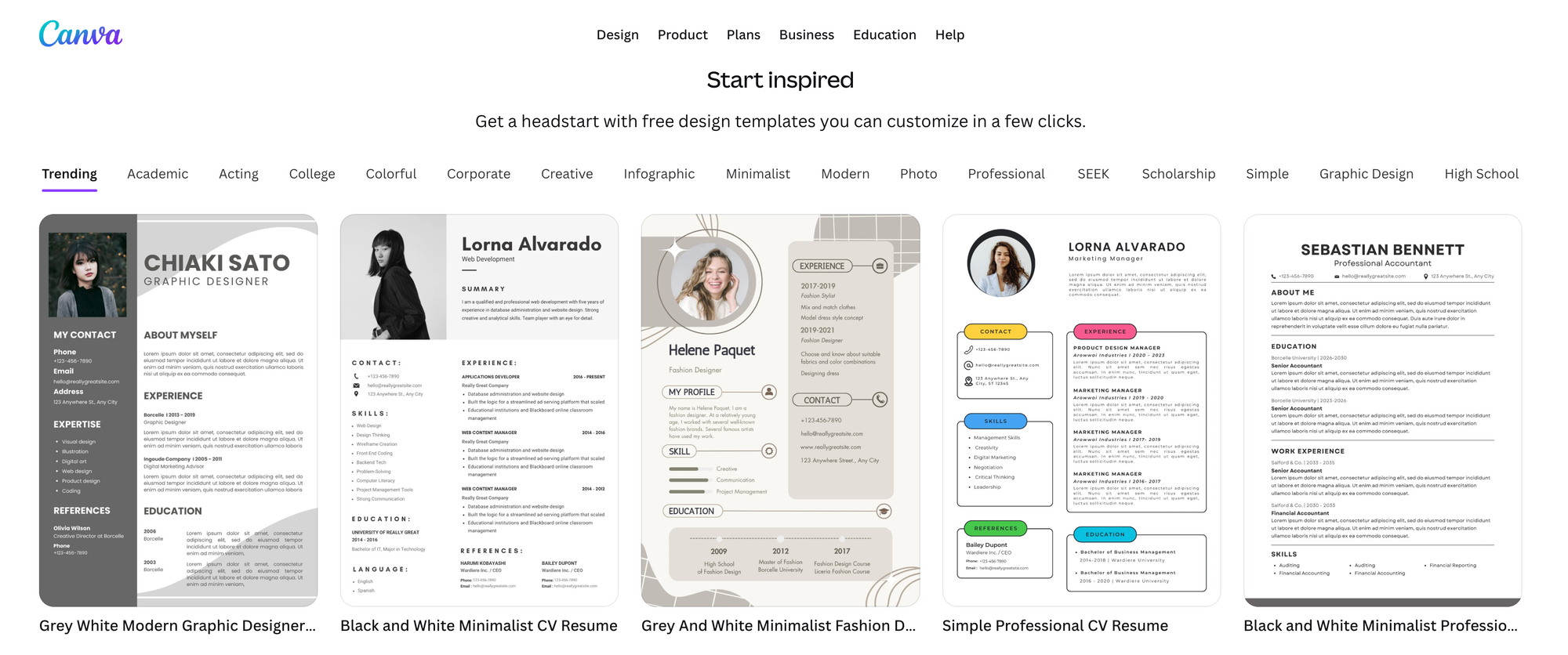
AI design tools (like Canva) encourage job seekers to stand out with graphics, icons, and large images, since it's easier to sell you a fancy résumé template than to tell you “boring is best.”
But obviously that's optimizing for the wrong thing. What's the point of having a fancy resume that looks good when the AI hiring software can't even process it?
Here's what to do:
Keep the formatting intentionally boring. Use one column and conventional headings like Summary, Experience, Education, and Skills. And for God's sake, avoid skill bars like the plague.
Export a selectable-text PDF, ideally below 2.5 MB. Open it and check whether you can highlight and copy the text. If you can't, the text may be trapped inside an image.
Rule 2: Make Your Fit Obvious
Across nearly 2 million applications, untailored résumés had a 3.09% interview rate versus 5.71% for tailored résumés. Yet résumés with the highest keyword coverage received 21% fewer interviews than those with moderate coverage.
The difference is how you use those keywords:
Keyword mapping: using relevant phrases from the job description to describe work you've actually done.
Keyword stuffing: cramming in phrases whether or not your experience backs them up.
For example: “Delivered customer support, customer service, and customer-focused communication to improve the customer experience” becomes “Reduced customer complaints by 31% using AI to create an onboarding email sequence from help center documents.”
And to ensure you don't fall into the keyword-stuffing trap, give AI the job description and your base résumé, then follow this sequence:
Identify the employer's problems. Ask what the role needs to solve.
Map relevant skills and keywords. Ask for stronger bullets connecting those priorities to your actual experience.
Check every suggestion. Remove anything you can't support with work you've really done.
Rule 3: Know Where AI Should Stop
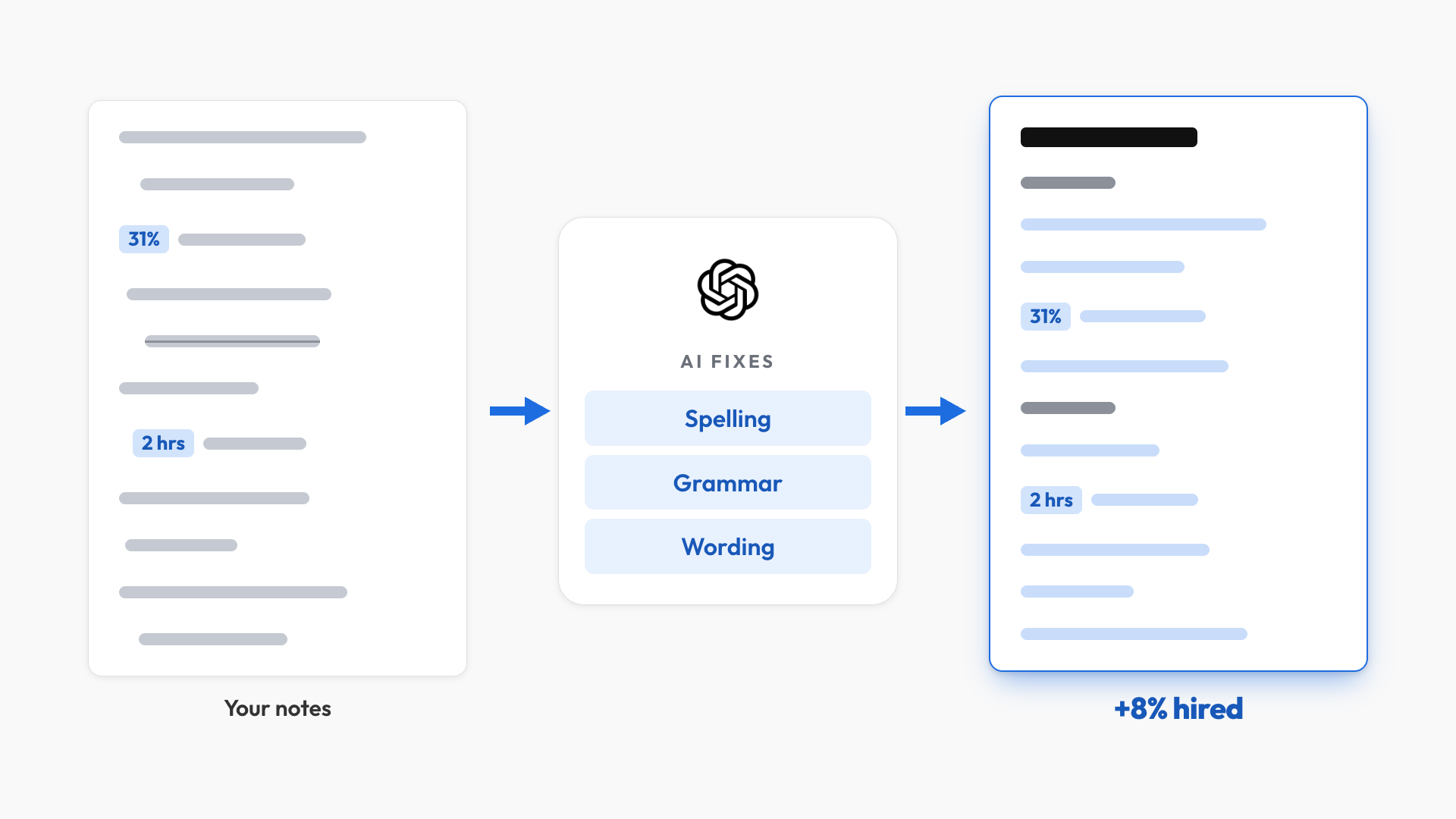
A randomized MIT experiment involving nearly half a million job seekers found that help with spelling, grammar, and wording increased the probability of getting hired by 8%. A separate ChatGPT experiment made applicants' pitches more similar and made it harder for evaluators to identify who was actually more qualified.
💡
The takeaway is simple: Thoughtful AI use helps your experience come through, while lazy prompts like “make my résumé better” produce the generic bullshit that hiring managers are sick of reading.
So how do you use AI "thoughtfully"?
Brain dump your facts first. For each experience, capture the final result, your specific contribution, and how you achieved it. Messy notes are fine (polishing comes next).
Use AI to strengthen the wording. Supply the job description and your notes without changing the underlying facts, then keep only language you could explain naturally in an interview.
Rule 4: Prove Your Impact With Numbers
In a nutshell, the research found résumés that QUANTIFIED a candidate’s impact saw 75% higher interview rates than those that only described responsibilities, and this makes perfect sense since two people can have the exact same responsibilities and yet produce completely different results.
Now, none of these findings are new: Adding metrics to your résumé has been best practice for decades. What IS new is that AI makes the two hardest parts much easier:
Figuring out which metrics actually matter, and;
Turning your rough notes into polished bullet points using a proven framework.
What that means in practice
First, upload your résumé and tell AI: “Help me identify the most relevant metrics for each experience on my résumé. Ask me clarifying questions if needed.”
This matters because a lot of candidates assume revenue is the only metric that counts, when there are many other ways to measure impact, such as time saved, speed, scale, accuracy, etc.
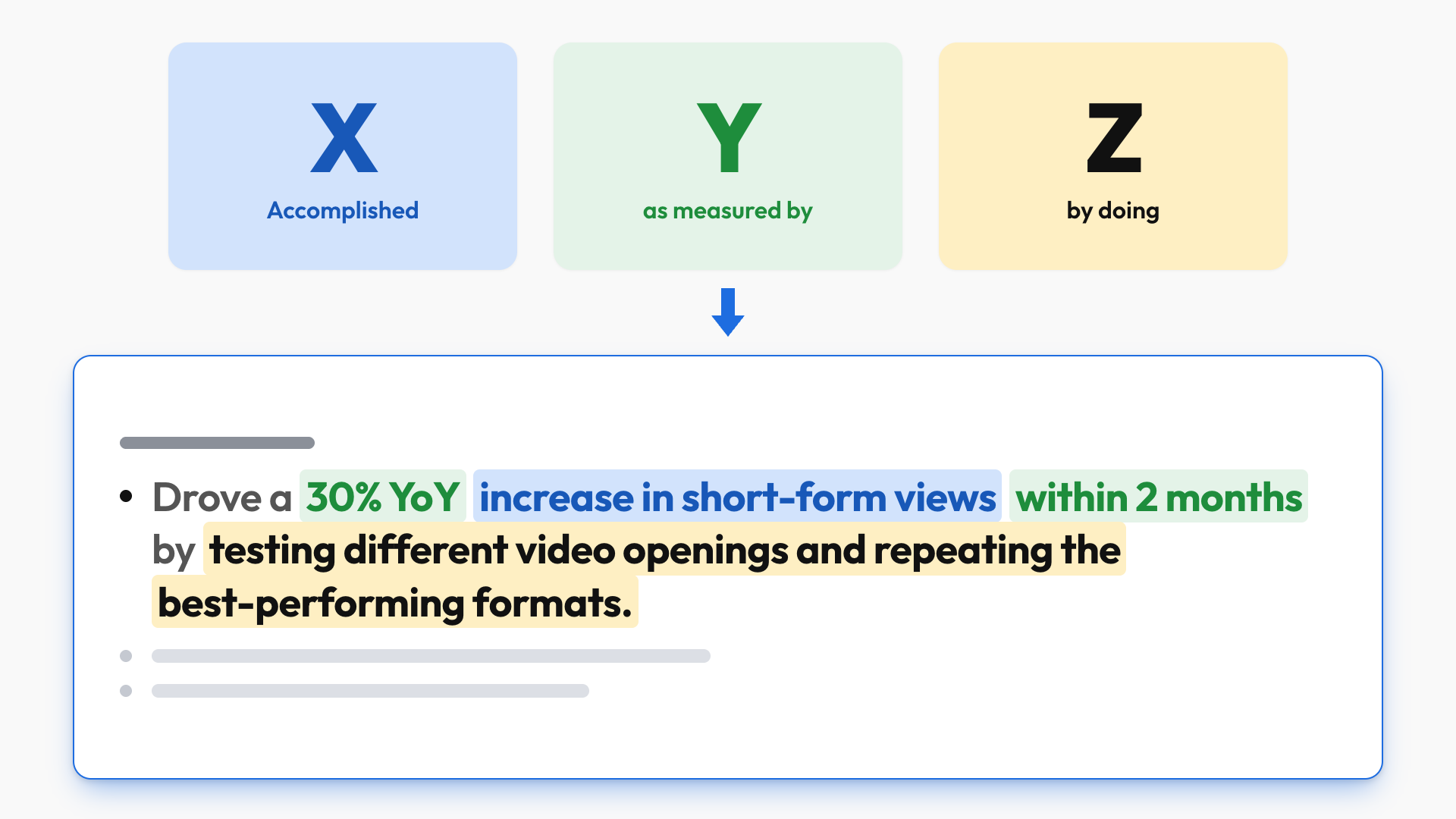
Next, after you’ve supplied numbers you can verify, tell the AI: “Rewrite each bullet usingGoogle’s XYZ formula: Accomplished X, as measured by Y, by doing Z. Do not add or change any facts or numbers.”
For example, the revised bullet might look like: “Drove a 30% YoY increase in short-form views within 2 months by testing different video openings and repeating the best-performing formats.”
Rule 5: Prove Your AI Skills
An Oxford experiment found that adding role-relevant AI skills increased a candidate's chance of being selected for an interview by up to 15 percentage points.
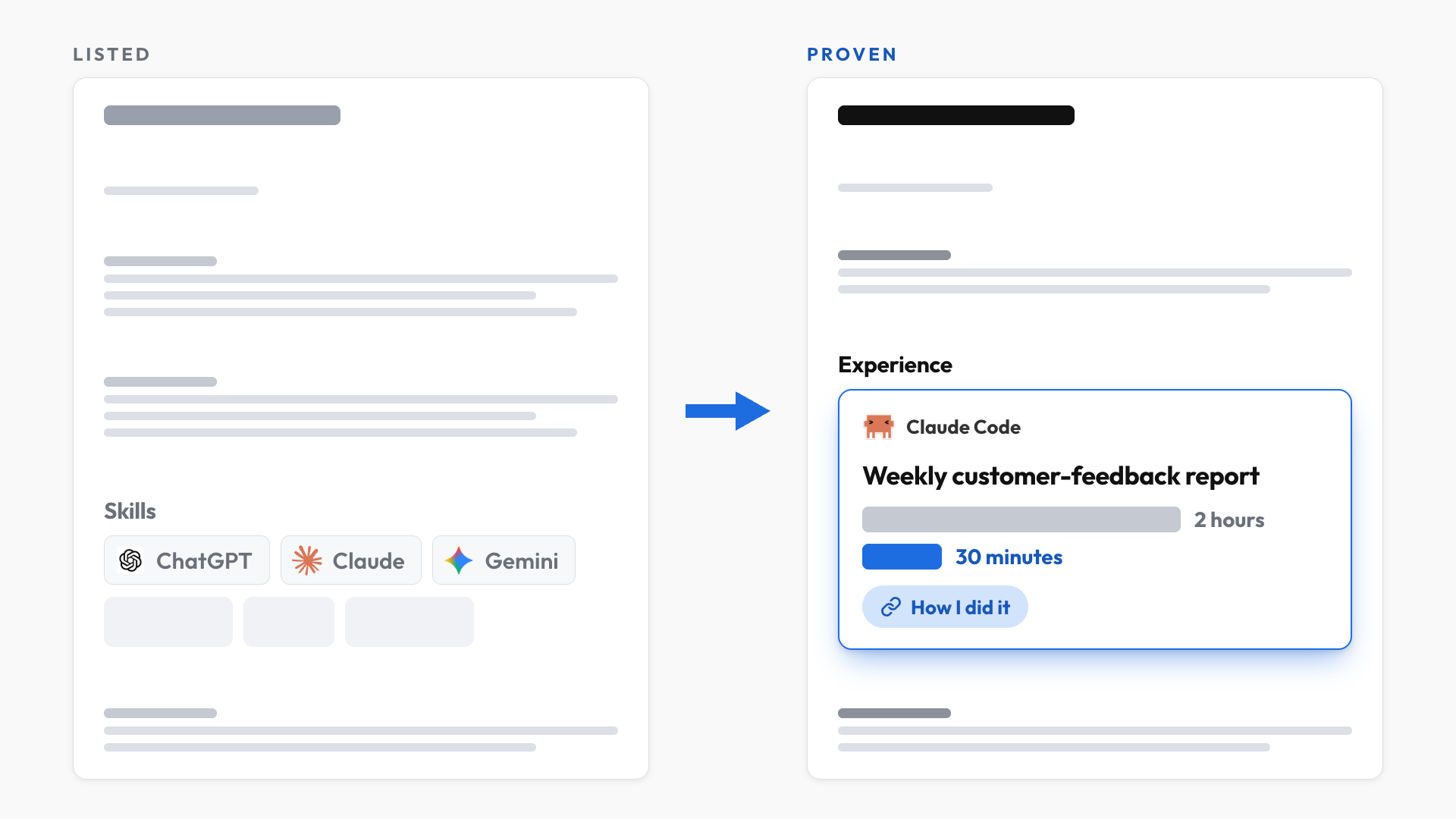
Put another way, writing “ChatGPT” in your Skills section isn't enough; you have to DEMONSTRATE how exactly you used AI to solve a problem relevant to the role.
Lead with a relevant AI achievement when you have one. For example: “Cut weekly customer-feedback reporting from 2 hours to 30 minutes by using Claude Code to build a shared database with recurring issues.”
If you don't have a workplace example, complete a small project for the job you want and list it under Projects.
Make the proof easy to inspect. Link to your portfolio. A Google Doc works too: explain the situation, how and why you used AI, and what changed as a result.
💡
Pro tip: Unless you're a fresh graduate, put Experience above Education, since 86% of hiring managers value relevant work experience over formal education.