|
AI
5 Gemini 3.0 Updates That Actually Matter for Work
The sheer volume of updates in Gemini 3.0 is overwhelming and honestly, not every new feature deserves your attention. After a month of reviewing official guides and testing the model with real-world workflows, I've narrowed down the five specific changes that actually impact professional productivity.
If that sounds useful to you, let's get started! 😁
Watch it in action
Resources
Google People Management Essentials Course (40% off): A Coursera course from "The Google School for Leaders" that covers core management skills and using AI as a management tool.
Essential Power Prompts: A Notion library containing 15 battle-tested prompts for professional use, including video walkthroughs.
Key Takeaways
- Gemini 3.0 processes audio, video, and text simultaneously to create instant training assets or analyze user feedback without manual logging.
- The model can now actively cross-reference large datasets to identify discrepancies between spoken claims in earnings calls and hard numbers in financial PDFs.
- Enhanced Workspace integration allows you to query your entire digital history to draft accurate testimonials and performance reviews based on actual correspondence.
Improved Multimodal Understanding
The first major update transforms how the model handles different media types.
Gemini 3 has improved significantly at understanding images, video, and audio simultaneously. Previous versions often processed video as a collection of static screenshots and a separate audio track. Now, the model links audio cues directly to visual data.
This capability allows you to upload a short-form video and ask Gemini to watch it and output specific recommendations.
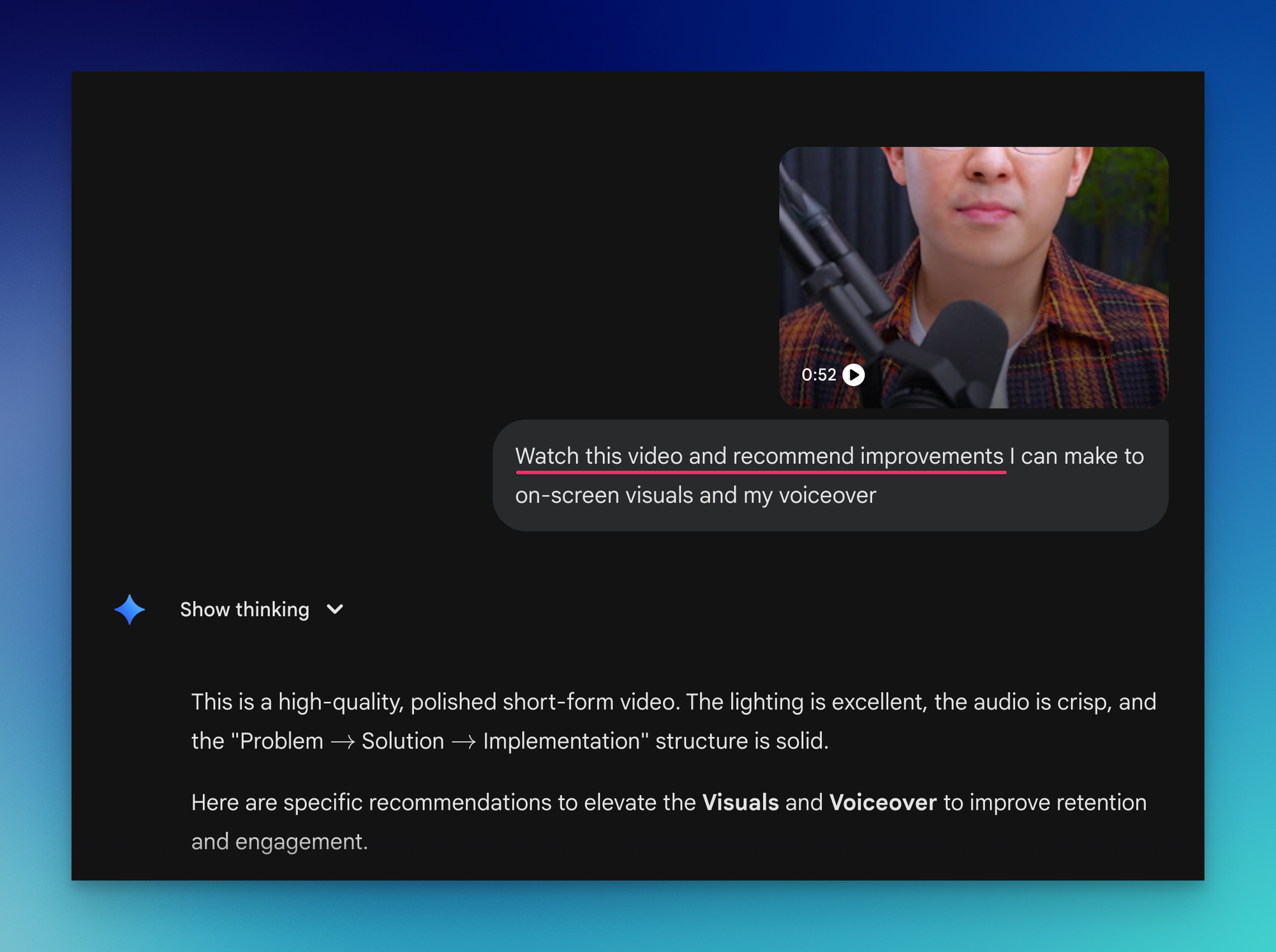
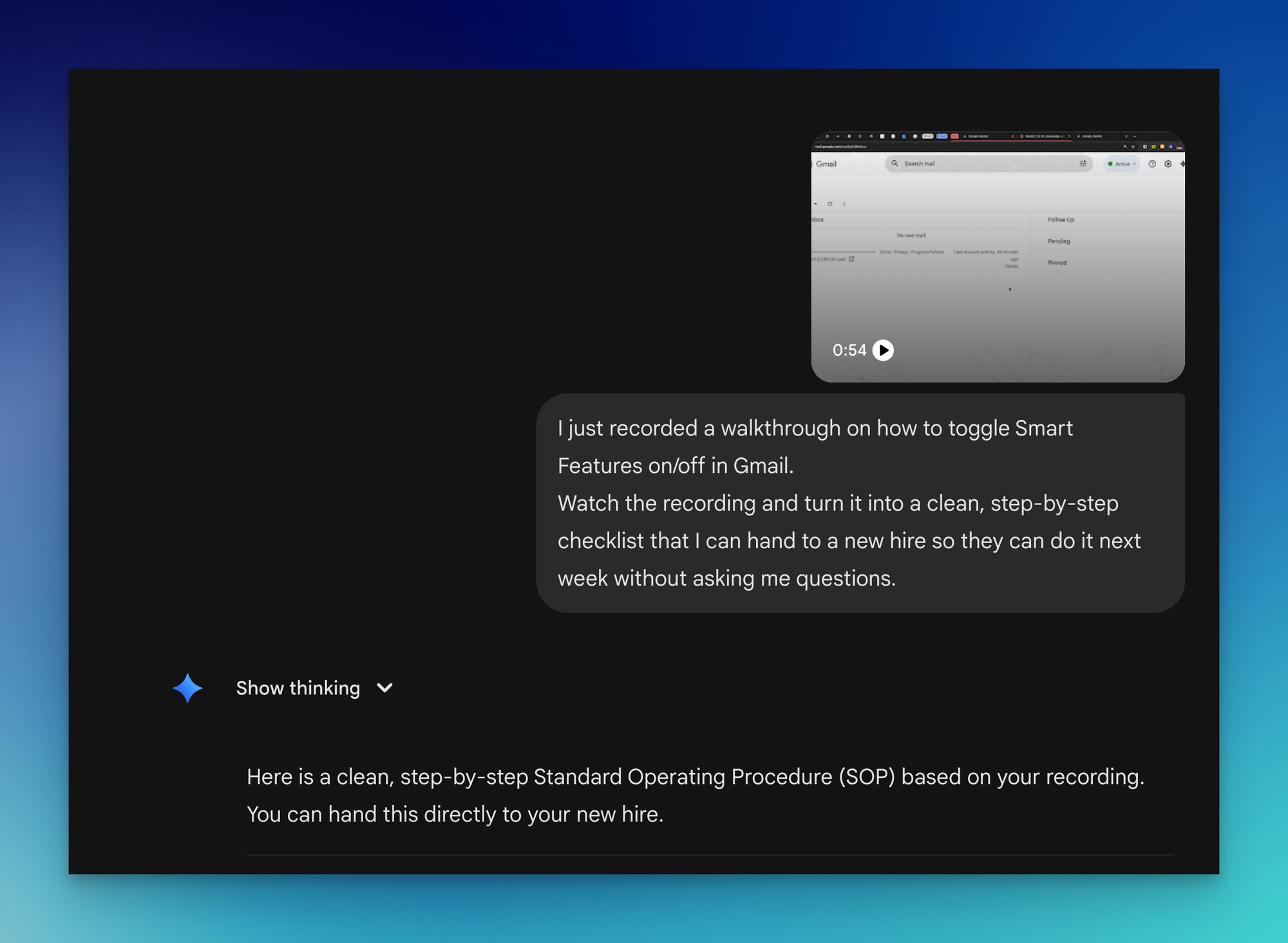
Here's a real-world example: You can upload a screen recording of a technical task and ask the model to turn it into a clean, step-by-step checklist for a new hire. In under 60 seconds, you convert a messy recording into a permanent training asset.
For UI/UX researchers, this is equally powerful. You can upload hours of user interviews and request a list of every moment a user frowned or paused for more than three seconds, along with a description of exactly what appeared on the screen at that moment. This level of analysis previously required weeks of manual logging.
Better Use of Large Documents
Here's the thing: while previous versions of Gemini boasted massive context windows, holding information is different from understanding it.
💡
Gemini 3 is 60% better at finding specific information buried deep inside documents. You should stop treating the context window as a storage bin and instead use it as active working memory.
Analyzing Discrepancies
Consider a strategy analyst covering a company like Meta. You can upload earnings call recordings and financial PDFs from the past year, then ask Gemini to identify discrepancies between management's stated strategy and the actual financial data.
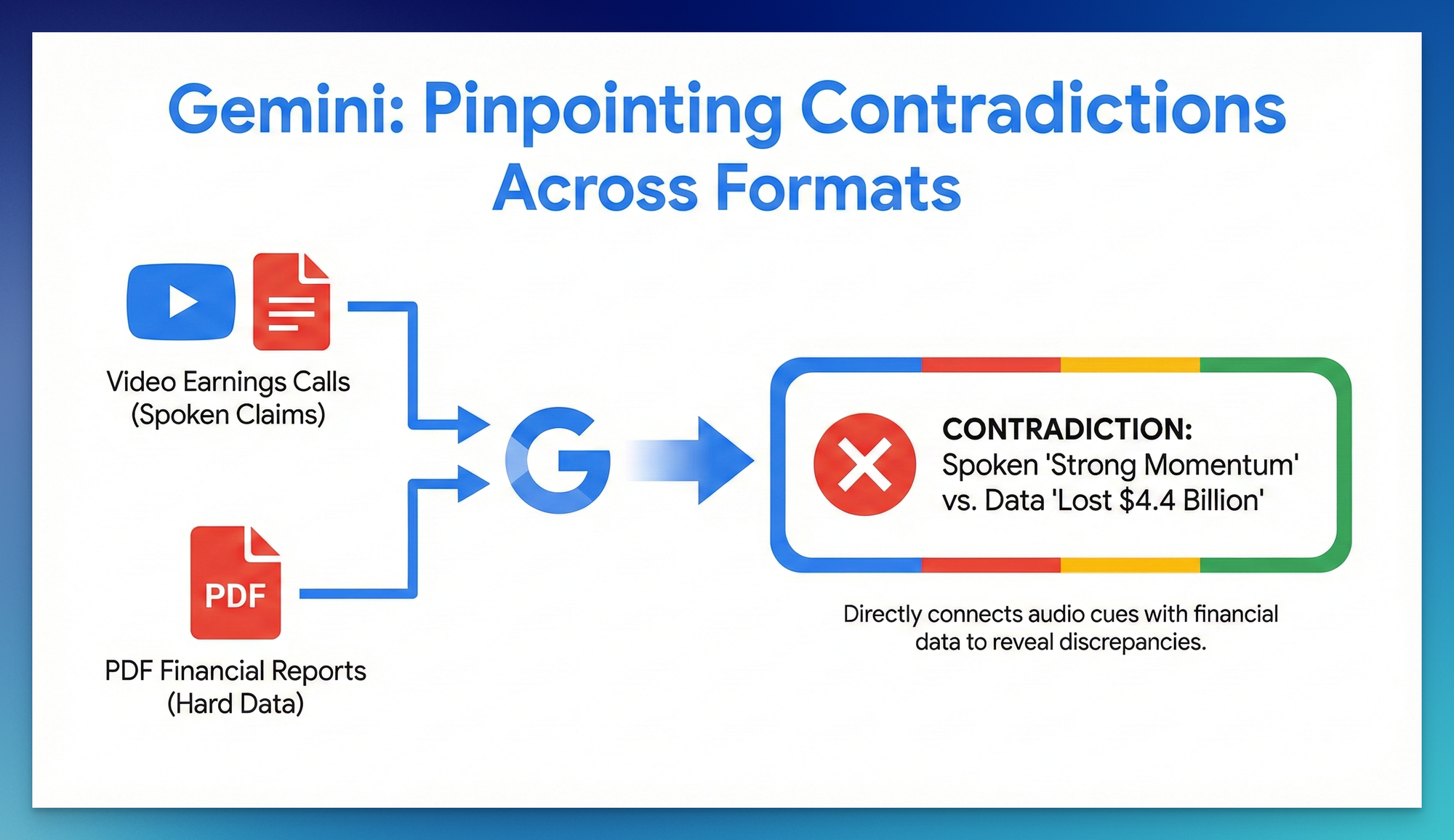
The model can identify that an executive claims "strong momentum" in a video call, while simultaneously flagging that the financial data shows that specific segment lost billions of dollars. It connects the qualitative statements with the quantitative reality.
Enhanced Workspace Search
In a nutshell: This feature turns your scattered digital history into a searchable knowledge base.
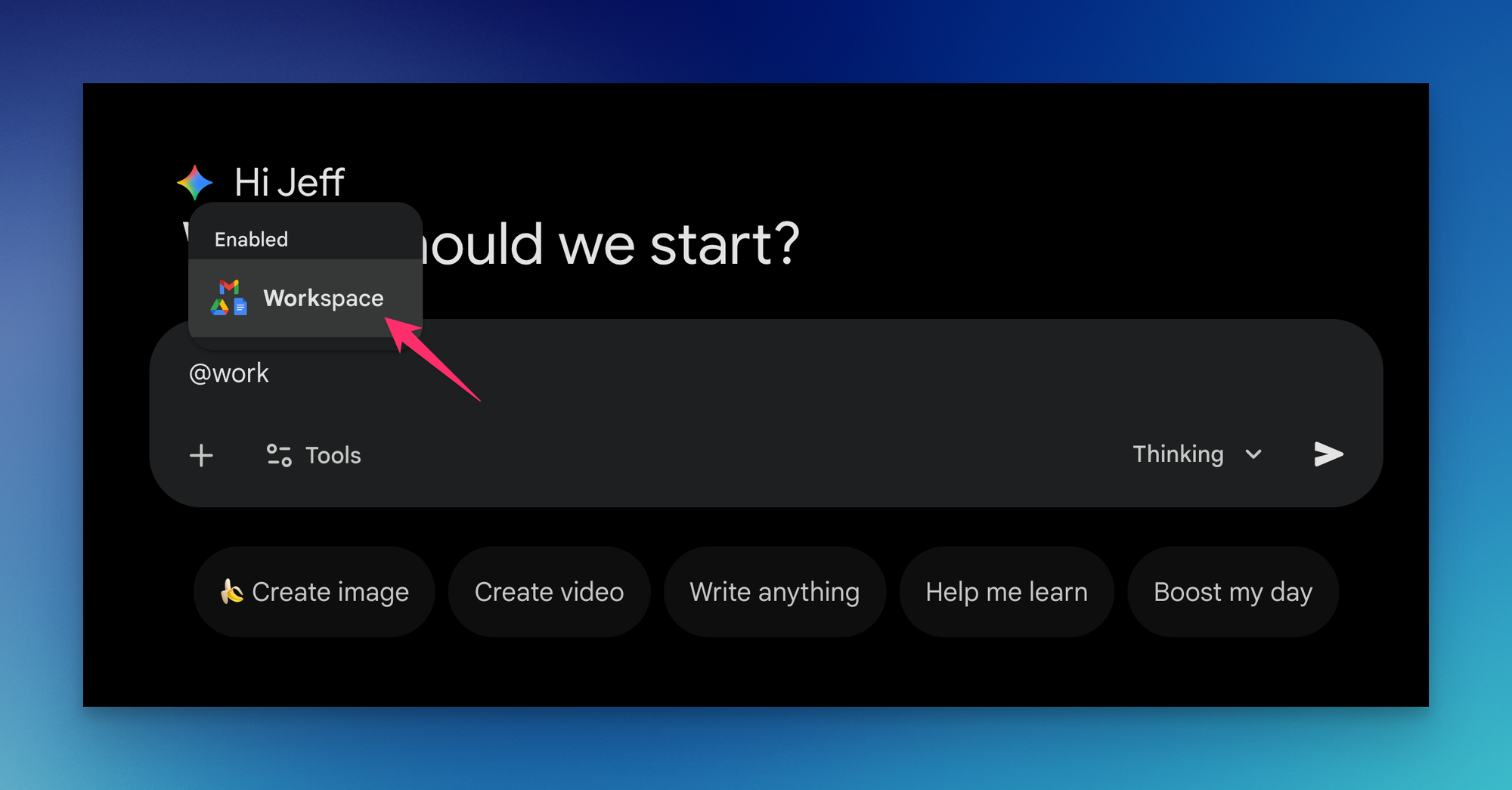
The ability to search across Google apps has existed for some time, but it was often inconsistent. Gemini 3 eliminates this inconsistency, making the Workspace integration reliable enough for daily use.
Automating Reviews and Testimonials
If a freelancer asks for a testimonial, you no longer need to hunt through old threads. You can enable the Workspace extension and ask Gemini to find everything related to that freelancer and draft a testimonial that cites specific deliverables.
💡
Pro tip: This is particularly useful for performance reviews. You can instruct the model to search your emails, documents, and calendar from the past six months to identify major projects and quantifiable results. It generates a first draft filled with specifics, saving you hours of reconstruction time.
Generative Interfaces
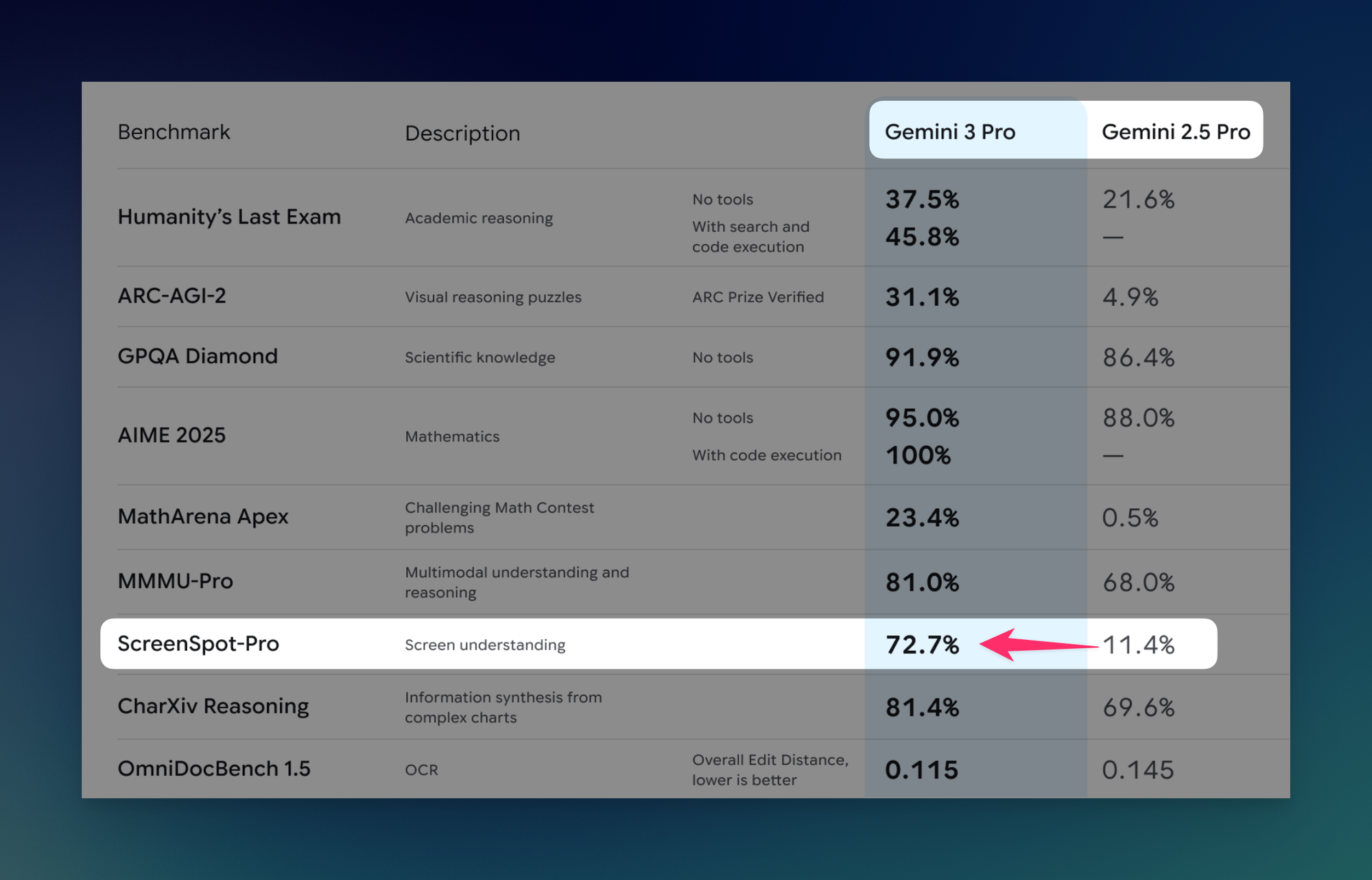
Gemini 3 scored 72.7% on the ScreenSpot-Pro benchmark, a massive leap from the previous 11.4%. This indicates a strong ability to understand user interface layouts.
💡
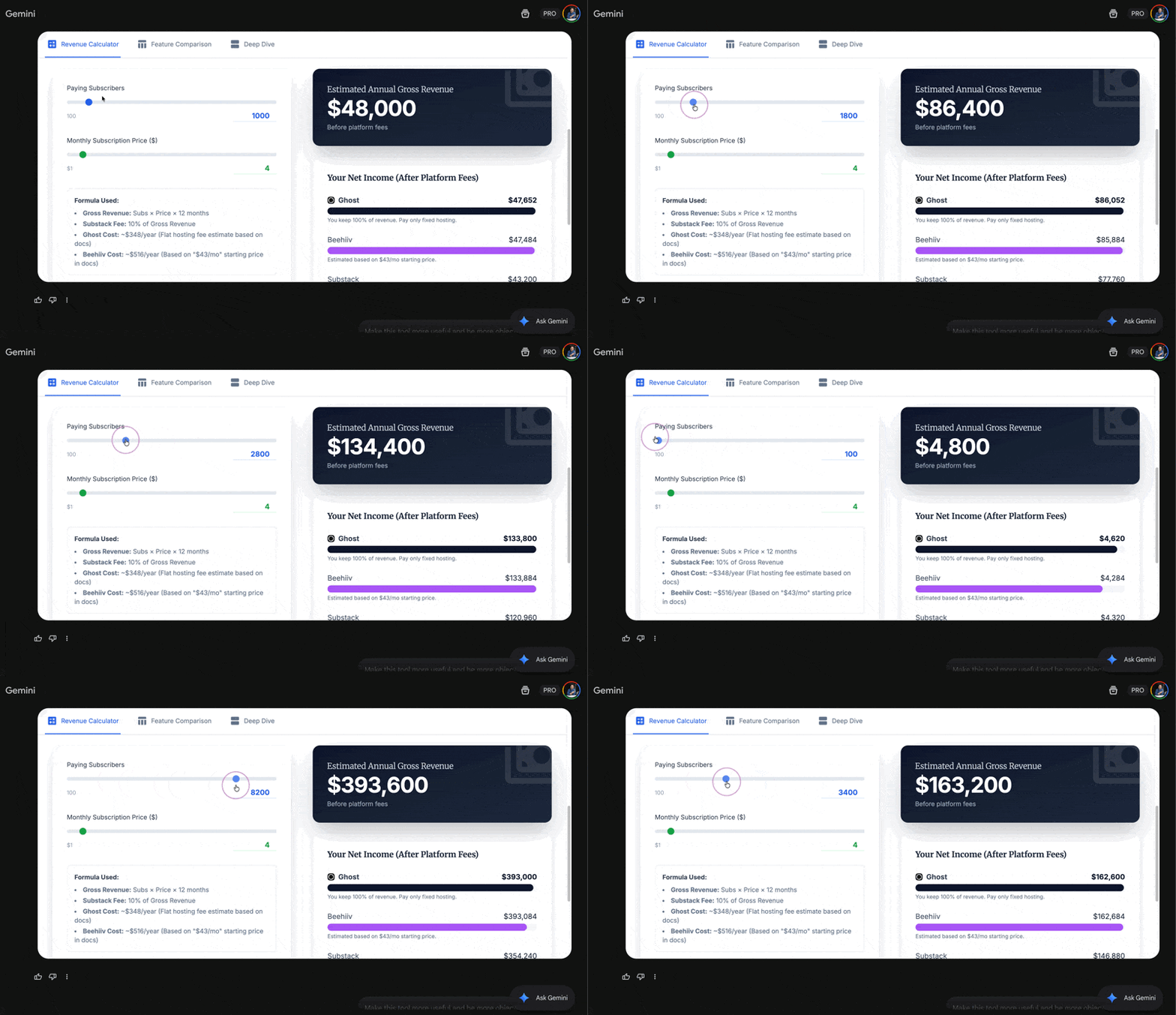
Put simply, the model can now generate interactive tools on the fly so the output format matches your task.
If you upload pricing pages for different software platforms and ask for a comparison, enabling "Dynamic View" creates a fully functional interactive tool. You get a calculator where you can move sliders to estimate revenue or costs in real time. Instead of manually reformatting AI output, the data arrives in a format you can use immediately.
Better Intent Understanding
Gemini 3 is significantly better at interpreting vague instructions. This shifts the focus from "Prompt Engineering" (obsessing over exact wording) to "Context Engineering" (curating the right background information).
Showing, Not Telling
Previously, to get a specific tone, you had to use descriptive adjectives like "punchy" or "friendly". Now, you can simply provide context.
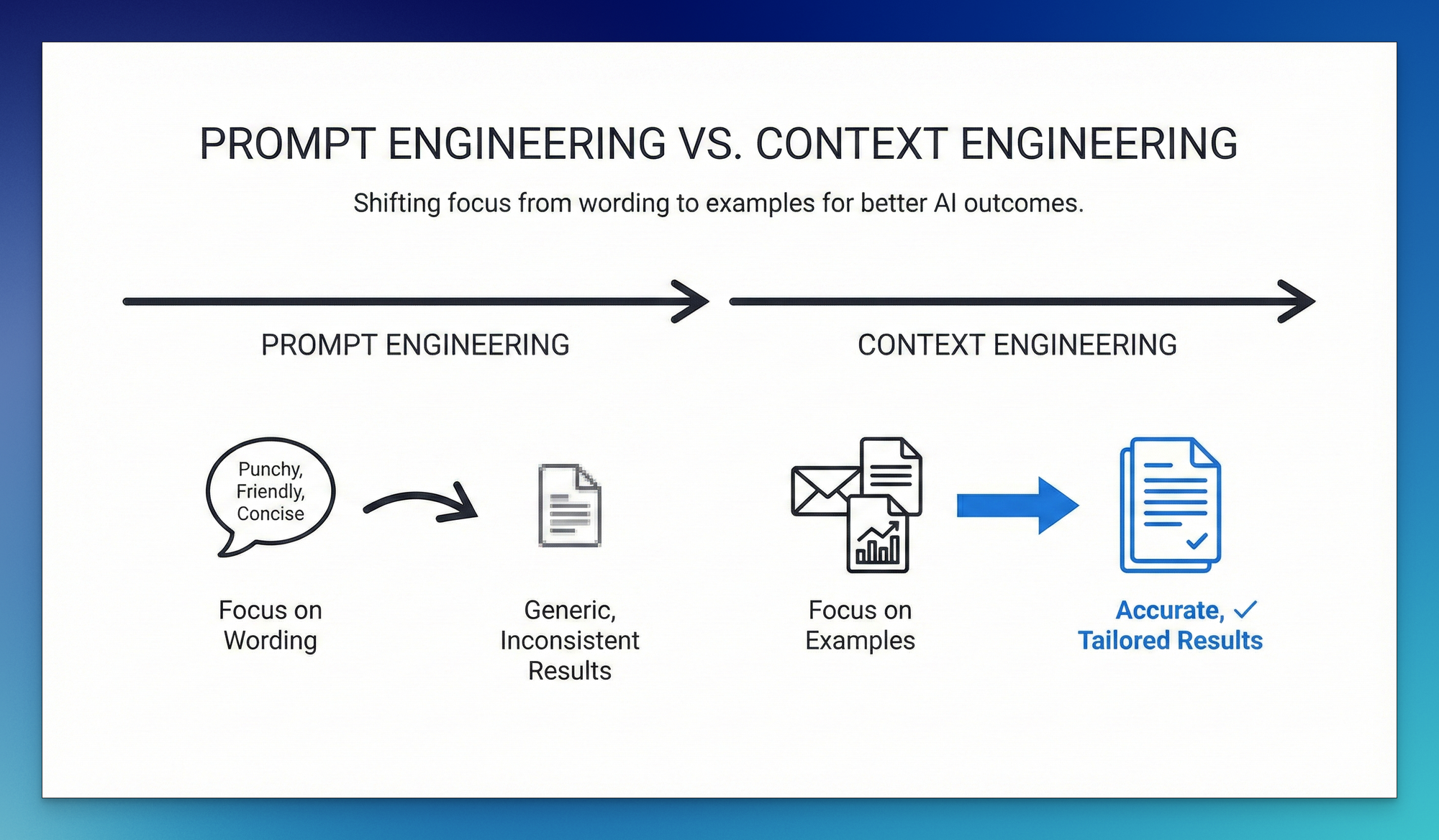
Here's a real example: If you need to rewrite a dry report into a LinkedIn post for a VP, you can upload three previous posts written by that VP and ask Gemini to rewrite the report based on those examples. The model mimics the sentence structure and vocabulary automatically because you provided the ground truth of the desired style.
Bonus: Reduced Sycophancy
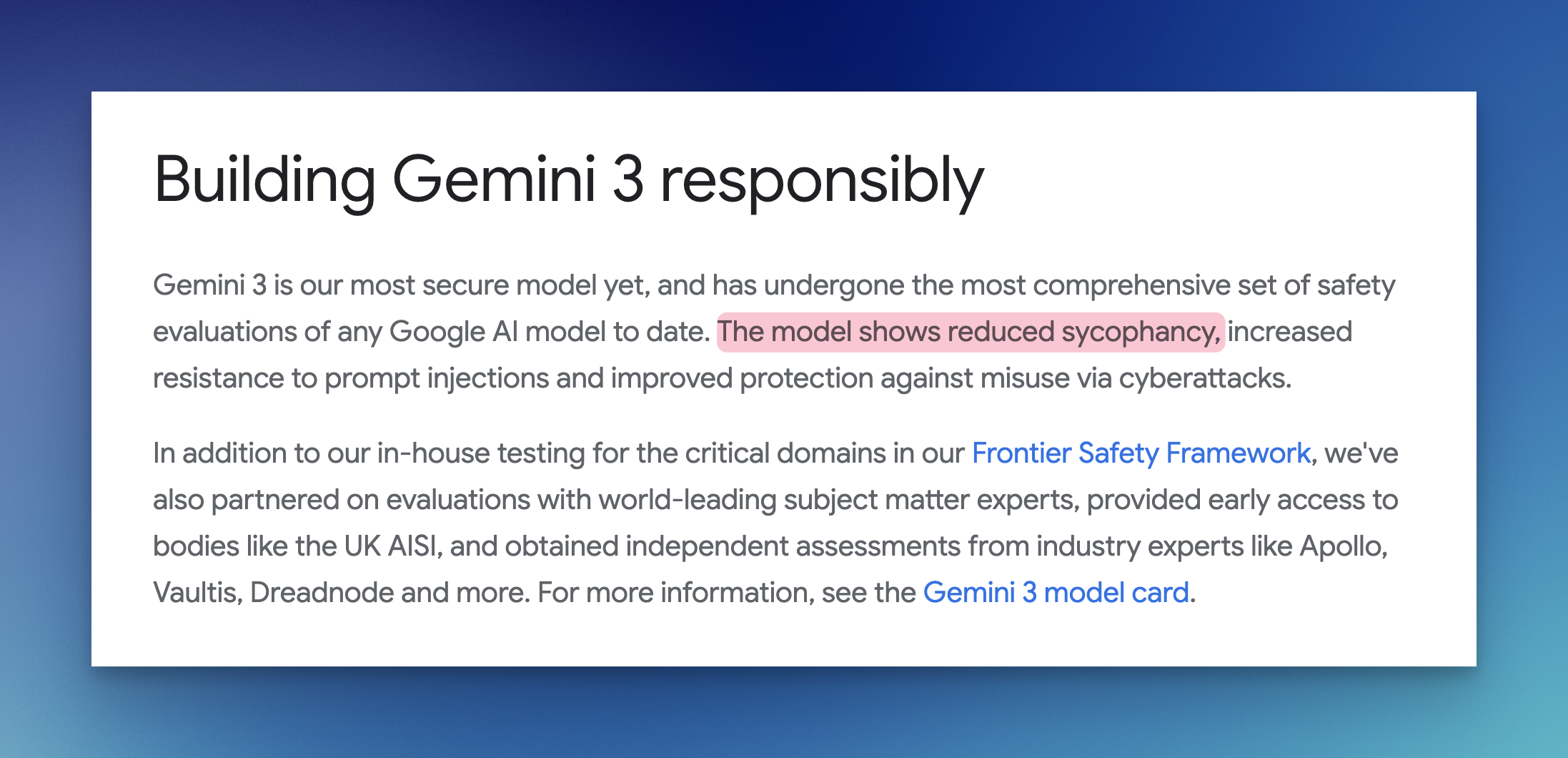
Google explicitly trained Gemini 3 to be less agreeable. The model is now more willing to tell you when you are wrong.
This is excellent for "Red Teaming" your own work. You can share a presentation and ask the model to identify storytelling weaknesses or logical contradictions. Instead of blindly validating your work, it will highlight disconnects and predict potential pushback from leadership.
If you enjoyed this...
You might also like: My 4 Favorite Prompting Techniques for Productivity!